“I didn’t choose to be a refugee, but I learned to breathe under the rubble.”
This is not just a passing sentence… It is a complete map of pain. Behind it lies a sea that swallowed names, borders that swallow years, and a world that prefers to look away so it doesn’t have to listen.
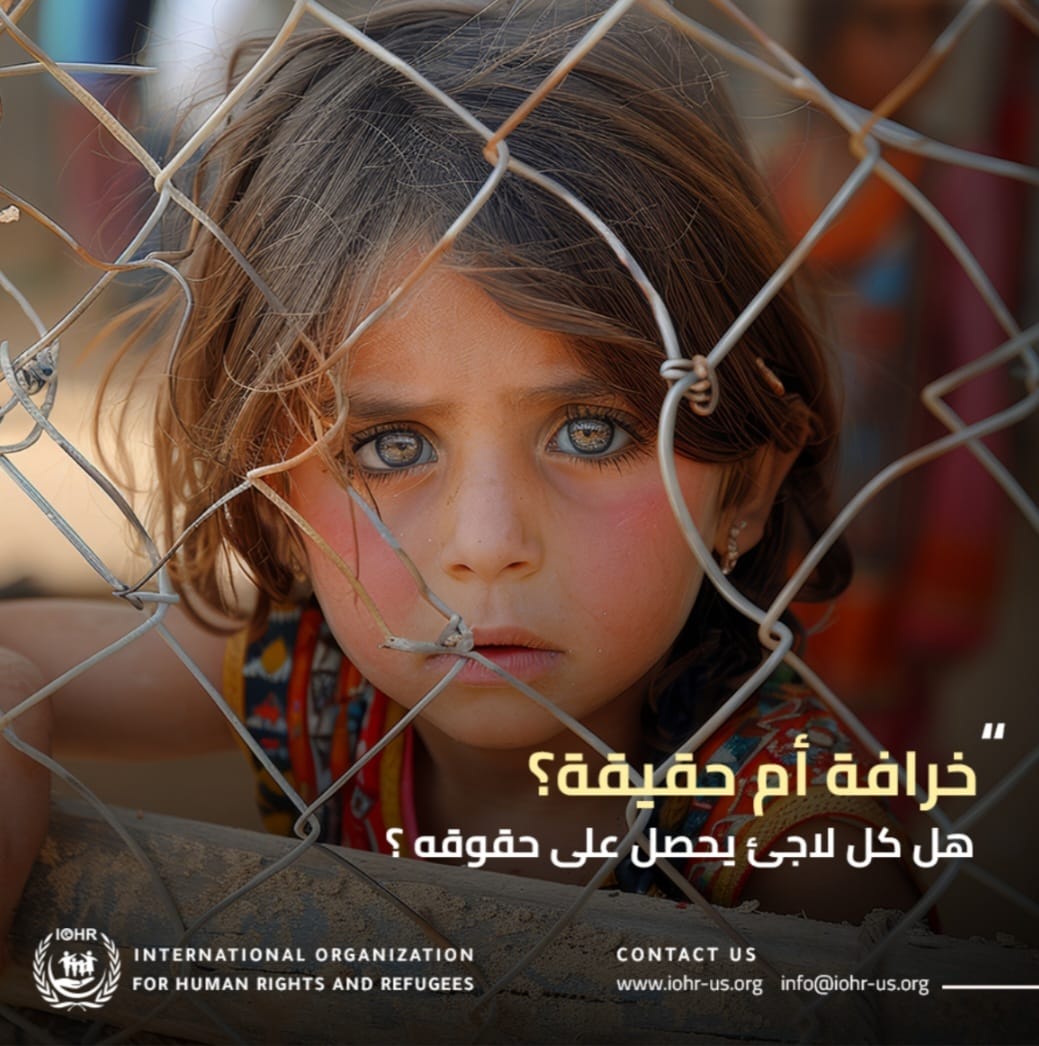
A refugee is not born this way.
A refugee is made… when doors close one after another: the door of safety, the door of freedom, the door of dignity—and then the last door closes with a heavy sound called “No one hears you.”
Seeking asylum is not a choice… it is the result of a collective failure
When a family flees death, they are not “looking for an opportunity”—they are fleeing a certain end. Yet, they are coldly redefined as “economic migrants.” As if pain needs an administrative classification before it can be believed.
The question that haunts the world like a heavy shadow:
Why does displacement multiply year after year?
Has leaving become a human hobby? Or have systems failed their most basic task: keeping people alive with dignity?
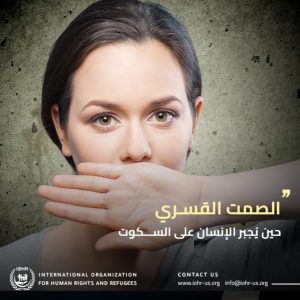
Silence… more dangerous than bullets
At the International Organization for Human Rights and Refugee Affairs (IOHR), we see a pattern more cruel than anything else:
Not just that people are displaced… but that they are ordered to be silent.
To be silent about torture.
To be silent about losing your family at sea.
To be silent about children dying at borders as nameless numbers.
This is not about “restricting freedom of expression”…
It is about the slow strangulation of dignity itself.
Forced silence is not neutrality… it is a silent partner in the crime.
“Gateway of Hope for Resettlement”: Breaking the cruel equation
In the face of this reality, it is not enough to tell stories… we must change their endings.
This is why the “Gateway of Hope for Resettlement” project was created—not as an empty humanitarian slogan, but as an actual bridge that moves people from a state of “survival at any cost” to “living with dignity.”
This project does not patch up tents… it opens doors:
1. Genuine resettlement solutions that move refugees out of the camp cycle into legal, secure stability.
2. Direct connections to jobs, education, and proper housing—so people can start anew, not from zero, but from a real opportunity.
3. Full legal support and family reunification—without exploitation, without hidden costs, without false promises.
With this, the refugee is no longer just a story told… but a future being built.
IOHR’s role: From documenting pain to dismantling it
Our work does not stop at monitoring; it moves in three decisive directions:
1. Strict legal documentation of violations, turning them into files pursued in international courts.
2. Breaking the wall of silence, giving refugees a voice—not to make the world weep… but to compel the world to listen.
3. Comprehensive psychological support and rehabilitation, because survival does not mean recovery… it means the beginning of a long road toward reclaiming oneself.
Silence is not a solution… it is the continuation of the tragedy
The world has grown accustomed to managing the refugee crisis… as if it were a file ready for archiving.
But the truth is far more unsettling:
Every silent refugee is a story not finished… but forced to stop.
We do not need more tents…
We need the courage to close the file of suffering, not to organize it.
From a person forcibly designed to be silent…
To a person who chooses to live, speak, and start again through a “Gateway of Hope.”
Because dignity is not given…
Either it is protected, or the entire world will be written down as a witness to its fall.