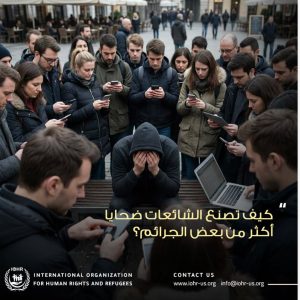
In the age of the internet, rumors are no longer casual conversations passed from one person to another. They have become a powerful digital force capable of changing a person’s life within minutes. A single story—whether fabricated, taken out of context, or deliberately misleading—can spread across thousands of accounts and reach a massive audience before the person concerned has even one opportunity to tell the truth.
Social media platforms have fundamentally transformed the way information is shared. Today, the value of content is often measured not by its accuracy, but by its ability to provoke surprise, outrage, or emotional engagement. The more sensational the content, the faster it spreads, even when it lacks the most basic standards of credibility and factual accuracy.
One of the greatest dangers of today’s digital environment is that platform algorithms do not always distinguish between truth and sensationalism. Instead, they tend to amplify content that generates the highest levels of engagement. As a result, false information can reach millions of people—not because it is true, but because it triggers curiosity, anger, or fear, emotions that encourage users to share before verifying.
The problem becomes even more complex because people naturally tend to believe information that confirms their existing opinions while questioning facts that challenge their beliefs. Consequently, rumors can spread rapidly within like-minded online communities until a repeated narrative begins to resemble a “collective truth,” despite having no credible evidence to support it.
This is where the real danger lies. Public opinion may deliver its verdict long before any competent authority has the opportunity to verify the facts. Digital platforms become public courtrooms where individuals are judged by comments, shares, and likes rather than by evidence, due process, or justice.
The consequences of rumors extend far beyond damage to personal reputation. They may cost individuals their jobs, destroy family and social relationships, and cause severe psychological distress resulting from organized defamation campaigns built on falsehoods. In many cases, the harm remains long after the truth has emerged, because corrections rarely spread as quickly as misinformation.
Rumors are also no longer created solely through spontaneous gossip. In many cases, they are deliberately manufactured as part of organized campaigns aimed at character assassination, manipulating public opinion, blackmailing individuals, influencing economic competition, or achieving political objectives. With the rapid advancement of artificial intelligence, highly convincing fake images, videos, and voice recordings can now be produced with ease, making fact-checking more essential than ever before.
The digital world has given everyone the power to publish, but it has also placed greater responsibility on everyone who does. Freedom of expression is not a license to circulate unverified information or to undermine the dignity and rights of others. Even a simple digital post can become a tool that causes harm far beyond the boundaries of a screen.
For this reason, media organizations, content creators, and all social media users share the responsibility of promoting a culture of verification before publication and refusing to circulate anonymous or unverified information. Every share can either help protect the truth or contribute to the spread of misinformation.
At IOHR (International Organization for Human Rights and Refugee Affairs), we believe that safeguarding the truth is no longer the responsibility of journalists alone. It is now a shared responsibility carried by everyone who has the ability to publish, influence, or communicate. A society that allows rumors to shape its public consciousness opens the door to human rights violations, weakens justice, and erodes trust among its people.
Combating rumors does not begin by deleting misleading posts after they have gone viral. It begins with building a digital culture that asks one essential question before every publication: Is this information true?—not Will it attract attention? Truly informed societies are not measured by how quickly they spread information, but by how effectively they distinguish truth from falsehood.
Truth is more than accurate information. It is the foundation of justice, the safeguard of human dignity, and a cornerstone of stable societies. Taking a moment to verify information before pressing the “Share” button may be the difference between protecting someone’s rights and contributing to an injustice against them.
Digital awareness is no longer optional—it is an ethical responsibility. Respecting the truth is, at its core, respecting humanity itself