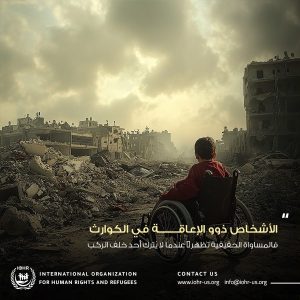
When natural disasters strike or conflicts and humanitarian crises erupt, everyone rushes to find safety. For persons with disabilities, however, even the simplest steps to escape or seek assistance can become complex challenges that may put their lives at risk.
Damaged roads may prevent wheelchair users from reaching safe locations, while early warning messages may not be available in accessible formats for people with hearing or visual impairments due to the lack of inclusive communication systems. Many emergency shelters also lack accessible infrastructure, suitable sanitation facilities, and essential services that accommodate their needs, leaving them at greater risk even after surviving the disaster.
The challenges do not end with survival. Many persons with disabilities face difficulties accessing healthcare, medications, assistive devices, and rehabilitation services. They are also often excluded from participating in decisions related to humanitarian response, despite being the people best equipped to identify their own needs.
An effective humanitarian response is not limited to providing food and shelter; it also requires removing the barriers that prevent everyone from accessing protection and assistance without discrimination. Inclusive planning, accessible information, and services designed to accommodate different types of disabilities are not optional additions—they are essential components of safeguarding human dignity.
At IOHR, we believe that building a fair humanitarian response begins with ensuring that no one is excluded because of their disability. Protecting persons with disabilities is neither an act of charity nor an optional initiative; it is a fundamental right guaranteed by human rights principles and international conventions.
The strength of societies is measured by their ability to protect those who are most vulnerable, and true equality is demonstrated when no one is left behind.